
Understanding Coccidia in Dogs
Coccidiosis is an intestinal illness that can affect many kinds of animals, dogs and people included. Among North American animals, coccidia ranks as one of the most common protozoal infections, trailing only giardia. The organisms commonly called "coccidia" belong to two genera, Eimeria and Isospora, each containing numerous species that infect animals around the world. The resulting diseases, grouped together as coccidiosis, differ greatly in how severe they become: some produce only mild, easily overlooked signs such as slight diarrhea that clears on its own, while others are highly virulent and can be fatal quickly.
The culprit is a protozoan capable of multiplying at a rapid pace. Most of the harm comes from this fast reproduction inside the intestinal wall and the resulting rupture of the cells lining the intestine. Multiplication passes through several stages before the final one, the oocyst, is shed in the feces. Oocysts withstand environmental stress remarkably well and are hard to eliminate completely from surroundings. They commonly contaminate feed and water, and once sporulated oocysts are swallowed by another animal, the cycle begins again in the new host.
The Life Cycle of Coccidia
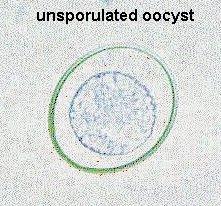
Both genera follow a similar life cycle. A host becomes infected by ingesting oocysts shed in another host's feces. The oocyst encysts in the small intestine, releasing the sporozoites inside it. These sporozoites invade the cells of the small intestine and reproduce asexually. Each round of asexual reproduction yields multiple merozoites, which leave the cell and infect new ones. This stage can destroy enormous numbers of intestinal cells and may ultimately prove fatal to the host.
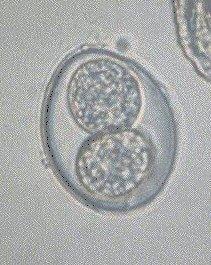
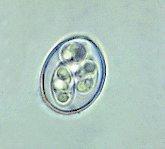
Some merozoites entering host cells become gametocytes, which turn into gametes. The gametes fuse, and the resulting zygote starts developing into an oocyst. The developing oocyst exits the host cell and is shed in the feces. When first passed, the oocyst is typically not infective because it lacks sporozoites; this is the unsporulated stage. After several days or weeks outside the host, depending on the species, it completes development and sporozoites appear inside; this sporulated oocyst can now infect the next host.
Clinical Signs
Signs of coccidiosis usually appear at or shortly after a stressful event: weather shifts, weaning, crowding, long car or plane trips, moving to a new home and new owners, or unsanitary conditions. What you observe depends on how far the disease has progressed. Because coccidiosis targets the intestinal tract, its signs relate to digestion. Mild cases may show only watery diarrhea, with blood present in small amounts if at all. Severely affected animals can pass thin, watery feces containing considerable intestinal mucosa and blood. Straining is usually obvious, and rapid dehydration, weight loss and anorexia (going off feed) may also be visible.
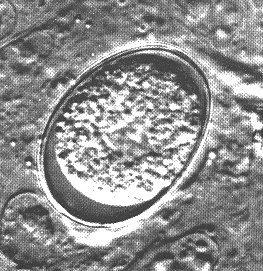
One of the most common canine coccidia is S. tenella, which appears at autopsy as microscopic muscle cysts in the host. Oocysts in dog feces are likewise microscopic and can only be confirmed through lab tests or direct observation under a microscope. "Nervous coccidiosis" is a nervous-system condition tied to coccidial infection. Its signs reflect central nervous system involvement and include muscle tremors, convulsions and similar symptoms; in "nervous cocci" dogs, any kind of stimulation seems to set off the signs. Death may follow acute disease either directly or through secondary illnesses such as pneumonia. Animals that survive 10 to 14 days may recover, though permanent damage is possible. Research suggests dogs may eat less for up to 13 weeks after a clinical infection.
Diagnosis is often clear-cut, yet confusion exists because apparently healthy animals can also carry oocysts in their feces. Diarrhea may appear before oocysts can be found, so a confirmed laboratory diagnosis is not always possible. Lab findings should be weighed together with clinical signs. Susceptibility varies: swallowing oocysts does not always cause disease, and some animals carry them constantly without being affected. Recovered animals develop immunity and seem partly resistant to reinfection.
Coccidiosis is often called an opportunist, a disease that emerges when other stressors are present. For instance, incidence peaks in the first 21 days after a dog changes owners and moves to a new residence. When a normal animal carries oocysts, rapid development is relatively easy once conditions favor it; bad weather, shipping, food changes, new owners, a new home and other stresses all matter. If coccidiosis is confirmed in a kennel, these steps should begin at once:
- Separate sick animals from healthy ones.
- Treat sick animals with effective medications.
- Medicate every dog in the kennel or home, since the others are likely infected.
General Information
- Coccidiosis is an opportunistic disease that generally affects stressed animals.
- Kennel conditions create ideal circumstances for an outbreak.
- In most confinement settings, prevention with a sulfadimethoxine drug such as Albon is recommended.
- Mass treatment of every dog in a kennel is usually the only effective approach.
- Sick animals should be treated as soon as possible and isolated from healthy animals.
- Have your veterinarian confirm a positive diagnosis of the coccidia protozoa in your dog's feces through lab tests or positive identification by direct microscopic observation.
How Can I Be Sure My Dog Has Coccidia?
Diagnosing coccidia is not easy. Diagnosis can be done in one of two ways: via fecal sample by a Vet or via educated evaluation of clinical findings by the
Explore More of Weepin Oaks Boxers
- Home
- Inspection by AKC
- AKC Boxers
- Boxers - The Guys
- Tom
- Rusty
- Hank
- Zeke
- Guy
- Boxers - The Gals
- Kezia
- Windy
- Older Pups For Sale
- New Puppies Info
- Puppy Basics 101
- Why Register
- Registering
- Breeder Search
- Dog Parks/Doggy Daycares
- Ground Pet Shipping
- Our Vet
- General Info
- The Sealed Brindle
- Frequent Q & A
- Waiting List/Visiting Policy/Prices/Pickup
- Sales Policy
- Sales Policy Details
- Puppy Pricing Info
- Payment Options
- Pick Up Options
- Health Guarantee/Contract
- Puppy Purchase Agreement
- NuVet Plus
- Kuranda Dog & Cat Beds
- Retired Dogs
- Enoch
- Lakotah
- Charlie
- Ray
- Nutrition
- Christmas Puppy
- No Puppy Mills
- Boxer Stud Service
- The Breeder
- Character Puppy Testing
- Canine Health Info
- Vaccine Failures
- Coccidia
- Demodex
- Tick Repellent
- Health Links
- Dangerous Foods
- Poisonous Items
- Health Certification Info
- Dogs & Hot Weather
- Rare/Search/Beware
- Responsibility
- Puppy News
- Before You Buy A Pup
- New Puppy Owner To Be